

Lessons in Patience and Parenting with Flexibility
If Part 1 of our autism journey was about navigating the early signs and speech challenges, Part 2 is about something far less predictable (and often much louder): autistic meltdowns.
As parents, we’re taught to expect tantrums. But meltdowns? They’re different. The Autism Treatment Center of America explains it perfectly: tantrums have a purpose (a child wants something and is upset they can’t have it), but meltdowns are an involuntary response to sensory overload.
And when you’re raising an autistic child, sensory overload is often part of the daily landscape—sometimes causing them to run in another direction and sometimes causing a collapse from exhaustion. Helping them to feel loved and safe will go a long way.
The Public Restroom Battle
From infancy to around three years old, my daughter had a full-blown fear of public restrooms. It didn’t matter if it was one stall or a giant space—it triggered screaming, crying, running, and all out panic.
I’ll never forget the stares, the whispers, and the judgment. My husband once overheard a woman exiting a restroom refer to our daughter as a “devil child” because of her meltdown. 💔 Please, if you ever see a parent in a difficult situation with their child, offer help and kindness. Not criticism. Treat others how you would like to be treated! Words cut deeply and help no one.
As prepared as a parent can be—to avoid stressful situations for themselves and their child, sometimes it’s unavoidable. Rather than letting fear and overwhelm control our future, I knew I had to teach her how to take control of those emotions.
What eventually helped?
- A helping hand (or toilet paper)—to cover the automatic flush sensors.
- Teaching her to cover her ears and sing while we were inside.
- Smiling and singing along with her.
Getting frustrated yourself, only makes the situation worse. Remember, our children learn by watching the world around them and that includes US, the parents. Lead them with patience and kindness. These little tricks turned restrooms from terrifying battlefields into manageable spaces. Hand dryers took many more years to conquer, but we eventually got there too.
Waiting It Out: The Highchair Nights

Not every meltdown had an easy solution. Some simply had to run their course.
I still remember one exhausting night in our tiny apartment when she refused to sleep in her crib. She insisted on sitting in her highchair. Each time I tried to carry her to the crib, she’d scream and run back up into the highchair. Every time she drifted off and I tried to make my move, the cycle repeated. This went on for hours. She just wanted to sit there in the dark. I didn’t understand it and she couldn’t tell me why. So I eventually gave up and just laid on the couch half-asleep until finally around 2 a.m., I was able to get us both to bed.
Sometimes the only “hack” is patience. Make sure they’re safe, make them as comfortable as possible, and wait it out. A little assurance to your concerned neighbors can also go a long way in calming everyone’s minds.
The Nemechek Protocol: Our Turning Point

During her kindergarten years, I came across a comment in an online ASD parenting group suggesting the Nemechek Protocol. Intrigued, I read the book and decided to give it a try—for both of us.
There are plenty of debates about it, but here’s what I know: for our family, it made a huge difference. A few months after we started it, I overheard another mother recommending it to her friend for help with her own child—and without hesitation I politely excused myself for interjecting, but I just had to back up this woman’s advice. Yes, it works. With EVOO, fish oils, organic inulin powder, and a more mindful approach to nutrition, we noticed changes:
- More alertness and less “zoning out”
- Better speech progress
- Fewer meltdowns
- Less stimming
- Less OCD behaviors
- Willingness to try new foods
- More involvement with others
- And the sweetest milestone of all: my 5yo daughter finally said her first “I love you.”
Like anything else, patience and consistency is key. It is not an overnight miracle worker, but it worked for us, and I’ll forever be grateful. I still regularly use this “tool” in our family and I cannot recommend it enough.
Avoiding Meltdowns: Proactive Parenting Wins
Over time, we learned that preventing meltdowns was often more effective than trying to soothe them in the moment. A few strategies that helped us:
- Multiple Backups: Extra diapers and clothes are always a must have when you have a baby or toddler. But when your toddler has a phobia of restrooms, those extra pairs of extras will come in handy. In the car, in the diaper bag, in the backpack—you name it… times two or three!
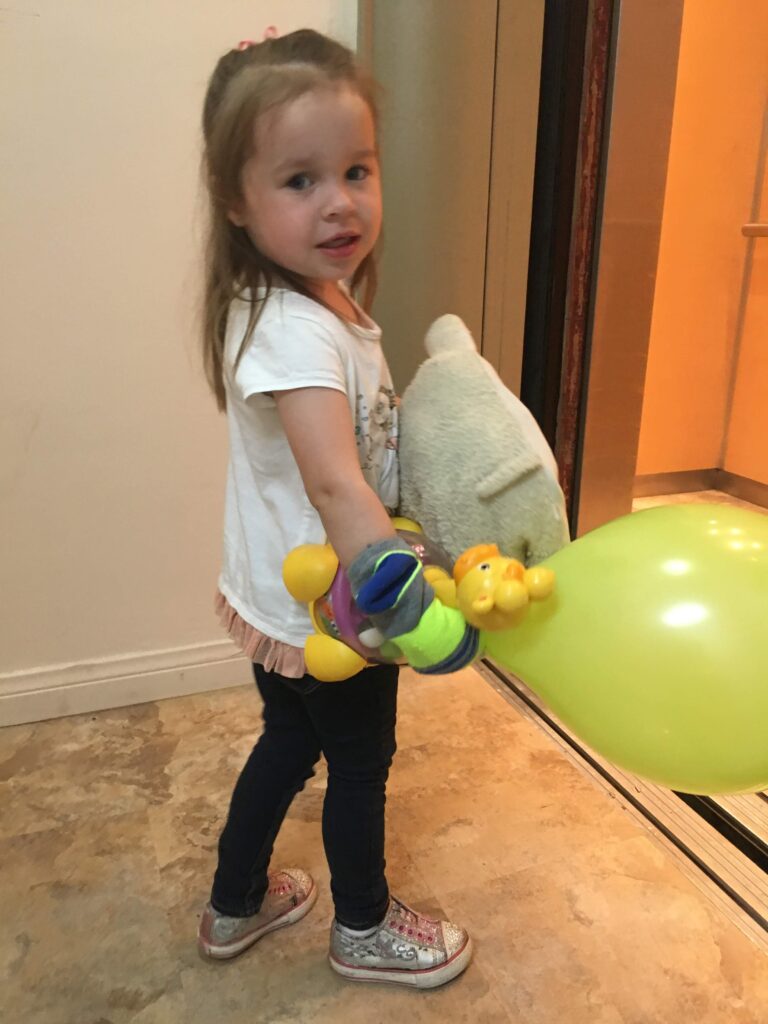
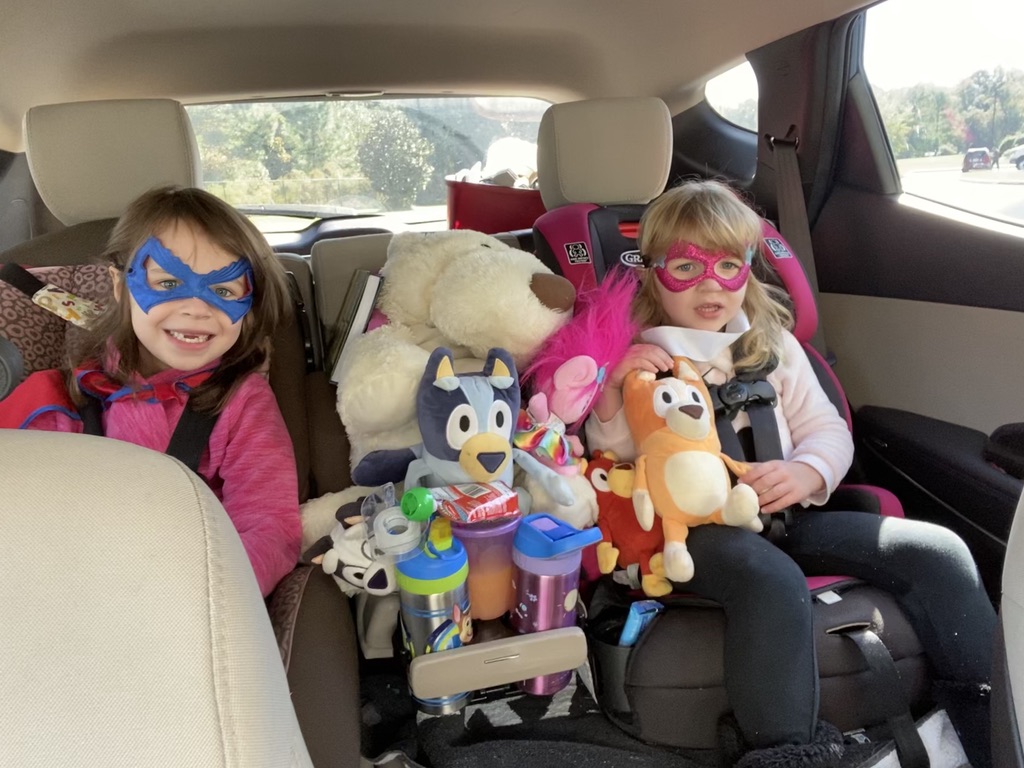
- Stuffie Squads: If bringing five stuffed animals to a restaurant kept her calm, we made space at the table. As she got older, we were able to narrow it down to one friend, while the others “kept each other company” in the car.
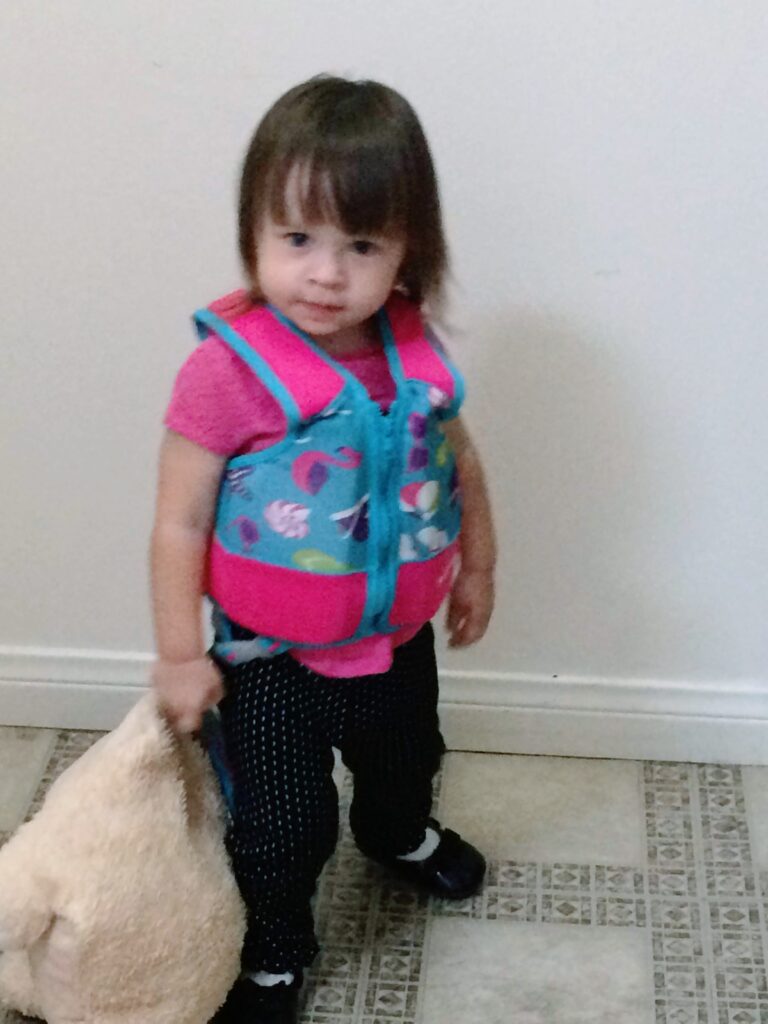
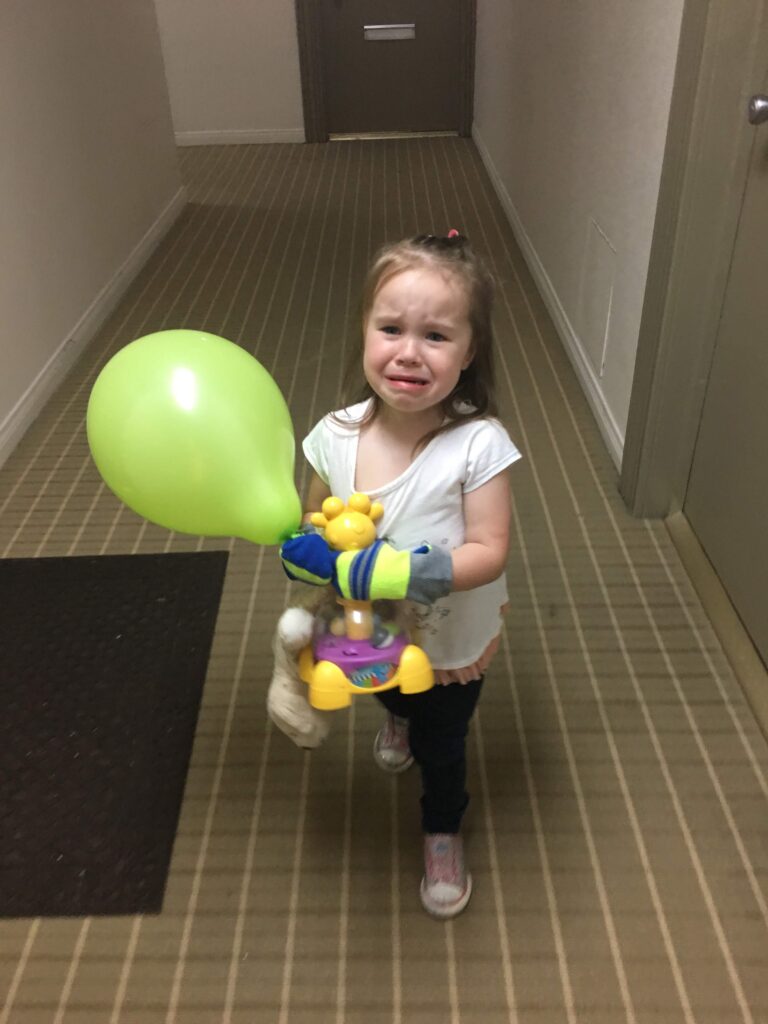
- Unusual Comforts: One phase involved wearing a life vest on afternoon walks. Another involved wearing my socks on her hands. Did it raise a few eyebrows? Totally. Did I care? No. Did they help her feel safe? Absolutely.
- Clothes Planning: To avoid the morning meltdowns in kindergarten, we got into the routine of having her choose her outfit the night before. Yes, the combos were often creative, but it gave her control and independence over her own style.
- Deep Breathing: This one is so important for every individual. Deep breathing helps us strengthen our mind/body connection and promotes relaxation in stressful moments. Taking a few minutes of deep/slow breaths with your child can be done anywhere and anytime emotions start to run high. Just have patience if it takes a few moments to fall into the rhythm. Inhale slowly for a 4-count and exhale slowly for a 6-count.
Empathy and Perspective-taking
Seeing things from another person’s perspective is a skill that takes time to develop and it can be especially difficult for autistics. But having the ability to “put yourself in someone else’s shoes” can foster understanding and cooperation.
Autistics often don’t like being interrupted when they’re focused on something of interest. They may also require more time to pivot. Saying her name once or twice, was never enough to get her attention. Gentle reminders and repeating directions were (and usually still are) required. But that’s who she is and I’ve had to find patience in that.
Understanding that the rows of toy cars (or other items) were put in their precise position and were not to be moved around, took time to realize. Recognizing her passion for stopping at every sign so we could read it to her, took planning for extra time on outings or walks through a parking lot. Trying to rush ANYTHING often resulted in frustration or meltdowns.
I once had to (embarrassingly) give our preschool teacher a “head’s-up” as to why there was a half-dozen brand new ladies underwear in my daughter’s backpack. Naturally it was because the watermelon and other cutesy patterns appealed to her and she wouldn’t give them up! She felt they were important to carry around and it made her happy knowing they were right where she put them. If I was in her 3yo shoes, I probably would’ve felt the same way.
👉 Lesson learned: Pick your battles. Help put a smile on their face instead of tears. If they feel the need to carry a balloon, a stuffy, and a toy for their outing—while wearing socks on their hands, what’s the harm? If it’s not hurting anyone, sometimes the best choice is to just say yes. Avoid unnecessary meltdowns.
Who She Is Today
Of course, growth doesn’t mean the challenges disappeared. Social awkwardness, difficulty with sarcasm, and the occasional meltdown still happen. Certain foods are still a hard-pass, some habits vanished, new ones developed, and obsessions come and go.
She’s grown into a compassionate, funny, hug-loving preteen with a big appetite for books, an unquenchable thirst for conversations about her favorite things, and a dream of becoming a veterinarian someday. Watching her evolve from those early struggles to where she is now has been the most challenging—and most beautiful—part of my life as a parent.
Closing Thoughts for Part 2
If I could offer one piece of advice, it would be this: find what works for your child, and don’t worry if it doesn’t look “normal” to anyone else. You must be your child’s biggest advocate.
Parenting an autistic child is about creativity, flexibility, resilience, and patience. It’s about supporting them, finding small wins, celebrating them, and knowing that progress comes in unexpected ways.
💬 If you’re just beginning your journey, please know—you are not alone. There’s a whole community of us out here, learning, growing, and cheering each other on. If you related to anything I’ve shared, I’d love to hear from you! Please share your story in the comments!
👉 If you’ve been following along, I hope you’ll stay with us and read part 3 of Our Autism Journey – Eyes Wide Open: I am a Late Diagnosed Autistic Woman.